


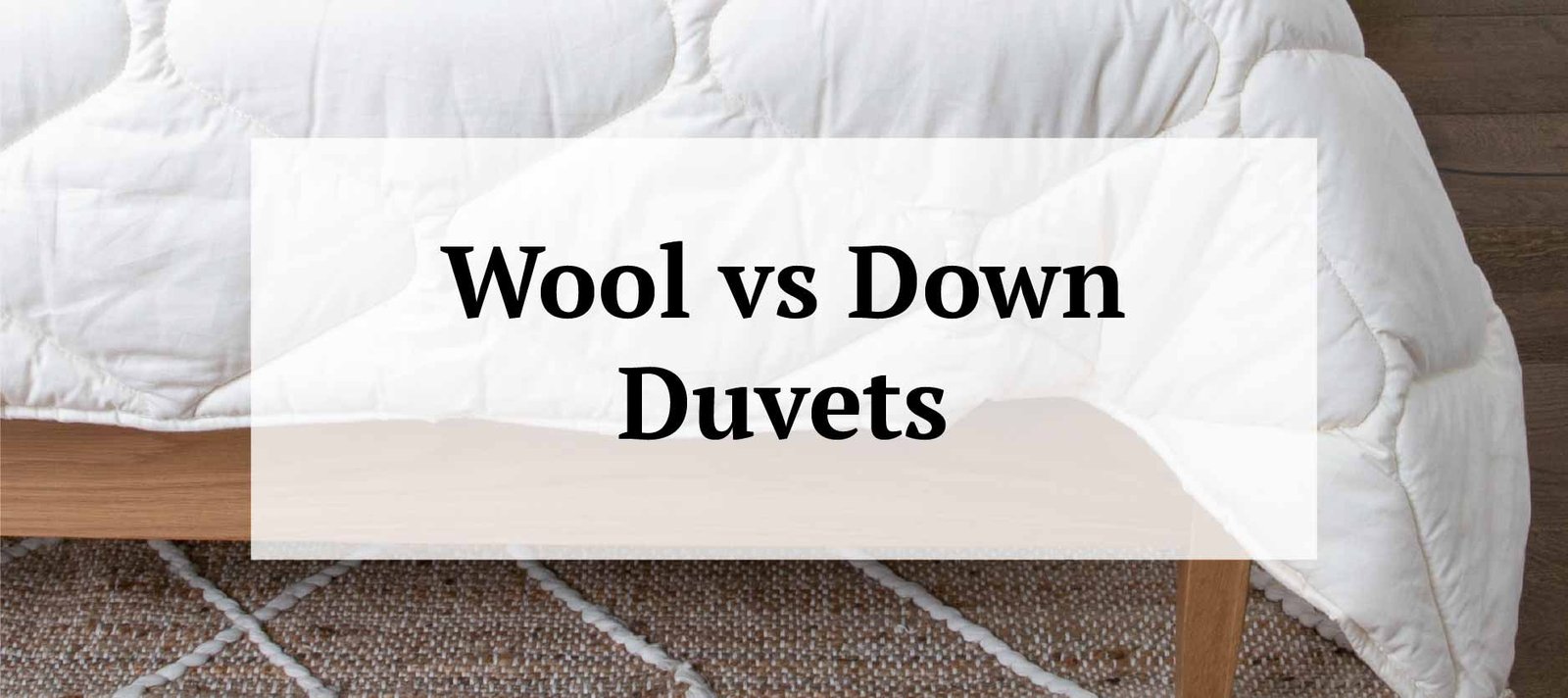
Choosing between a wool duvet vs down duvet is one of the most common bedding decisions. Both offer warmth and comfort, but they perform very differently.
Understanding how each material behaves will help you choose the best option for your sleep style and home environment.
Warmth and Temperature Regulation
Down duvets are known for their lightweight insulation. They trap air efficiently, creating warmth without significant weight.
Wool duvets, however, regulate temperature more dynamically. Wool fibres respond to body heat, releasing excess warmth when needed.
- Down: excellent insulation, very lightweight
- Wool: breathable, adaptable, less prone to overheating
Moisture Management
Wool can absorb up to 30% of its weight in moisture without feeling damp. This makes it ideal for those who experience night sweats.
Down is less effective at moisture control and can feel clammy in humid environments.
Allergies and Sensitivities
Wool is naturally resistant to dust mites and mould, making it a good choice for allergy-prone sleepers.
Down duvets can trigger sensitivities unless thoroughly cleaned and certified.
Sustainability Considerations
In the wool duvet vs down debate, sustainability is increasingly important. Wool is renewable and biodegradable. Ethical down sourcing varies, so certifications are essential.
The Campaign for Wool highlights the environmental benefits of wool as a natural fibre.
Which Should You Choose?
If you prefer lightweight loft and hotel-style insulation, down may appeal. If you value breathability, moisture control and natural performance, wool is often the superior all-season choice.
Discover our natural wool duvets designed for breathable, year-round comfort.
When comparing wool duvet vs down duvet options, comfort ultimately comes down to how you sleep.