


Wool Duvet Vs Down Duvet
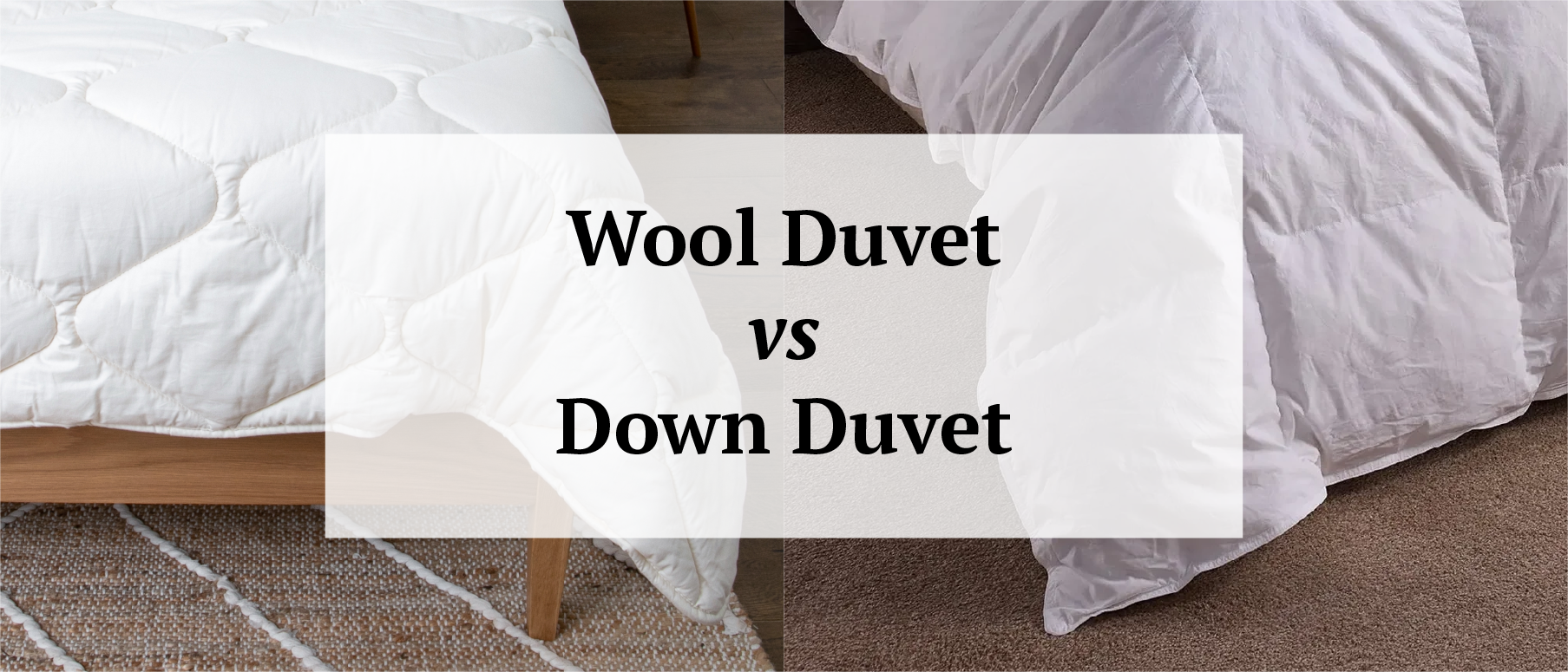
Choosing between a wool duvet vs down duvet is one of the most important bedding decisions you can make. Both materials offer warmth and comfort, but they perform very differently across seasons, sleep styles and household needs.
This detailed comparison explains the differences in insulation, breathability, allergy suitability, sustainability and long-term value, helping you decide which duvet is right for your home.
What Is a Wool Duvet?
A wool duvet is filled with natural wool fibres, typically encased in a cotton cover. Wool is naturally temperature regulating, moisture-wicking and breathable.
Unlike synthetic fillings, wool adapts to changes in body temperature, helping maintain a comfortable sleep environment throughout the year.
Explore our natural wool duvet collection to see breathable, responsibly sourced options.
What Is a Down Duvet?
A down duvet is filled with the soft under-feathers of ducks or geese. Down clusters trap air efficiently, creating lightweight insulation with significant loft.
Down is commonly associated with hotel-style bedding due to its fluffy feel and light weight.
Wool Duvet vs Down Duvet: Side-by-Side Comparison
| Feature | Wool Duvet | Down Duvet |
|---|---|---|
| Temperature Regulation | Adapts naturally to body temperature | Traps heat efficiently but less adaptive |
| Breathability | Highly breathable | Moderate breathability |
| Moisture Management | Absorbs up to 30% of weight without feeling damp | Limited moisture absorption |
| Allergy Suitability | Naturally resistant to dust mites | May trigger sensitivities |
| Weight | Slightly heavier, evenly distributed | Very lightweight and lofty |
| Sustainability | Renewable and biodegradable | Varies depending on sourcing |
| Lifespan | 10–15+ years with care | Can lose loft over time |
Temperature Regulation: Which Performs Better?
One of the biggest differences in the wool duvet vs down duvet comparison is temperature control.
Wool actively regulates body heat. As temperatures rise, wool fibres release excess warmth and moisture. In cooler conditions, the fibres trap air for insulation.
Down traps air extremely well but does not adapt as dynamically. Some sleepers find down too warm during transitional seasons.
Moisture and Night Sweats
Wool can absorb up to 30% of its own weight in moisture without feeling damp. This makes it particularly beneficial for those who experience night sweats or live in humid climates.
Down offers less moisture regulation and may feel clammy if humidity builds.
Allergies and Sensitivities
For allergy sufferers, wool often performs better. Wool fibres are naturally resistant to dust mites and mould growth.
Down duvets can be suitable if certified and thoroughly cleaned, but they may not be ideal for highly sensitive sleepers.
Sustainability and Environmental Impact
In the wool vs down duvet debate, environmental considerations are increasingly important.
Wool is renewable and biodegradable. Organisations such as the Campaign for Wool highlight wool’s sustainable lifecycle.
Down sourcing varies significantly. Responsible Down Standard (RDS) certification helps ensure ethical sourcing, but environmental impact depends on supply chain practices.
Longevity and Value
Both duvets can last many years with proper care. However, wool’s natural resilience helps it maintain structure over time without clumping.
Down may gradually lose loft, especially if not professionally cleaned and aired regularly.
Which Duvet Is Best for You?
Choose wool if you prioritise:
- Year-round temperature regulation
- Breathability and moisture control
- Natural, renewable materials
- Allergy-friendly bedding
Choose down if you prefer:
- Lightweight loft
- Traditional hotel-style feel
- High insulation with minimal weight
For many UK homes, where temperatures fluctuate throughout the year, wool offers reliable comfort in every season.
If you value breathable, natural sleep solutions, a wool duvet may provide superior long-term comfort. Shop our full range of wool bedding here.